GHL: In-Charlie settings
Last updated: April 28, 2026
Within each AI Setter's Integrations tab, you'll find dedicated "GHL settings" that enable powerful data synchronization. This core functionality ensures seamless information flow between Charlie and GHL through bidirectional data synchronization, automatically updating both systems as conversations progress. This guide provides a deep dive into the functionality, configuration steps, and key insights for optimal implementation.
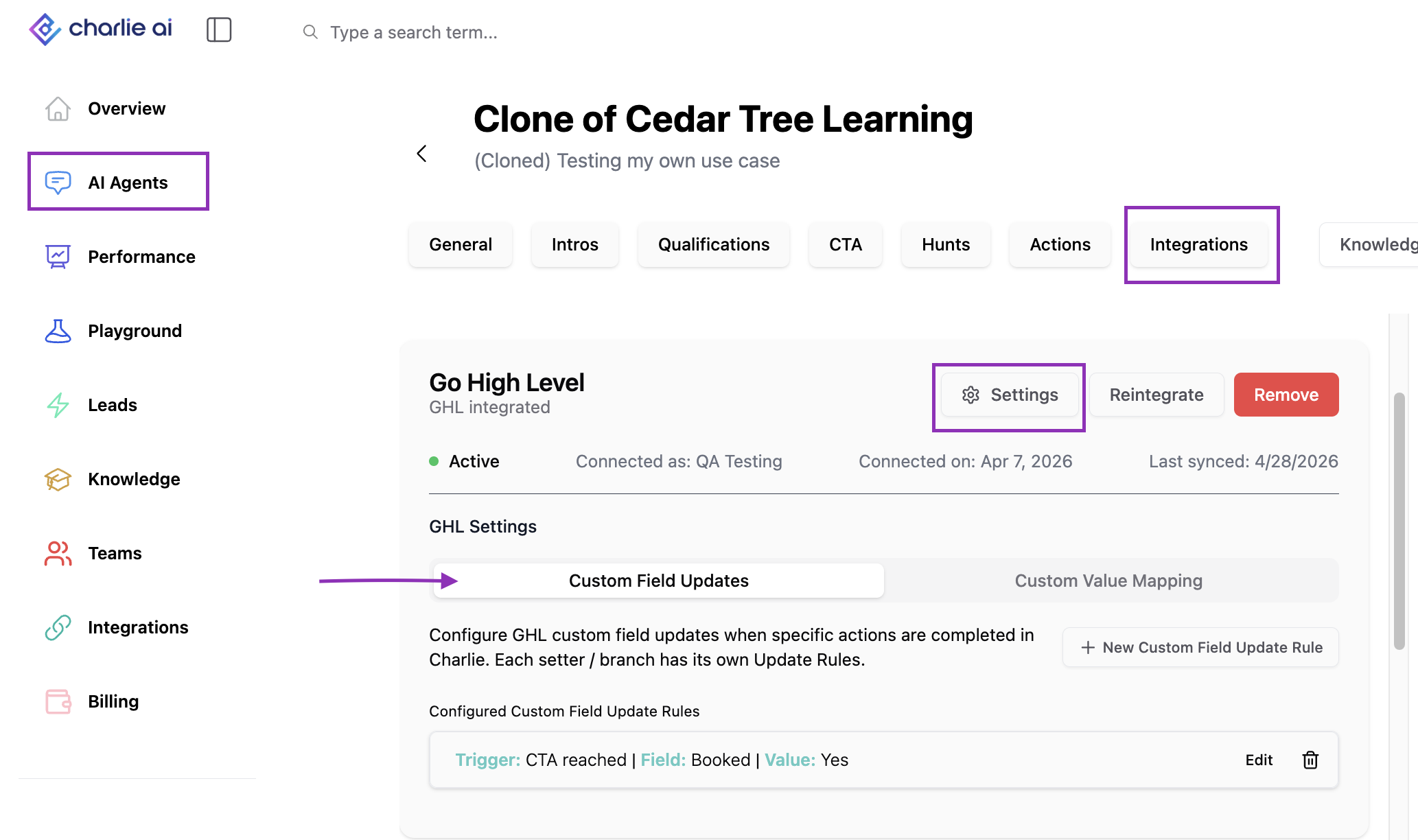
Prerequisites
You must have at least one AI Setter (DM use case) created and configured.
Custom Fields updates
In-Charlie GHL Settings are Setter-specific configurations that control how Charlie automatically updates GHL custom fields when conversation milestones are reached.
These settings enable you to:
Automatically update GHL properties when specific actions are completed in conversations
Synchronize systems bidirectionally without manual data entry
Maintain data consistency across platforms in real-time
Trigger downstream workflows in GHL based on Charlie conversation outcomes
When a "trigger event" occurs in a Charlie conversation, Charlie automatically writes a specified value to a designated GHL custom field, keeping your CRM updated in real-time.
For this feature we have 8 available "actions" that will be identified as triggers, and they can be used to update any of the properties that are set within your GHL account.
The "new property value" field is dynamic, which means that it will take the format of the property within GHL, (text box, or selection dropdown)
The custom field must already exist in GHL. You cannot create new fields from Charlie.
Direction of Data Flow: Charlie → GHL
Benefits
Immediate Synchronization: Updates happen in real-time as conversation events occur, eliminating delays between Charlie actions and CRM updates.
Automatic CRM Maintenance: No manual data entry required—your HubSpot records stay current automatically, freeing your team from administrative work.
Improved Lead Traceability: Accurate, timely property updates enable precise lead tracking through your funnel, revealing where leads get stuck or convert most effectively.
Workflow Automation Enablement: Updated properties trigger HubSpot workflows automatically, creating seamless multi-touch campaigns and follow-up sequences.
Actions
Action to trigger the update
Lead Activated
Intro Response
CTA reached
DQ reached
DQ removed
Booked reached
Kill Switch reached
Kill Switch removed
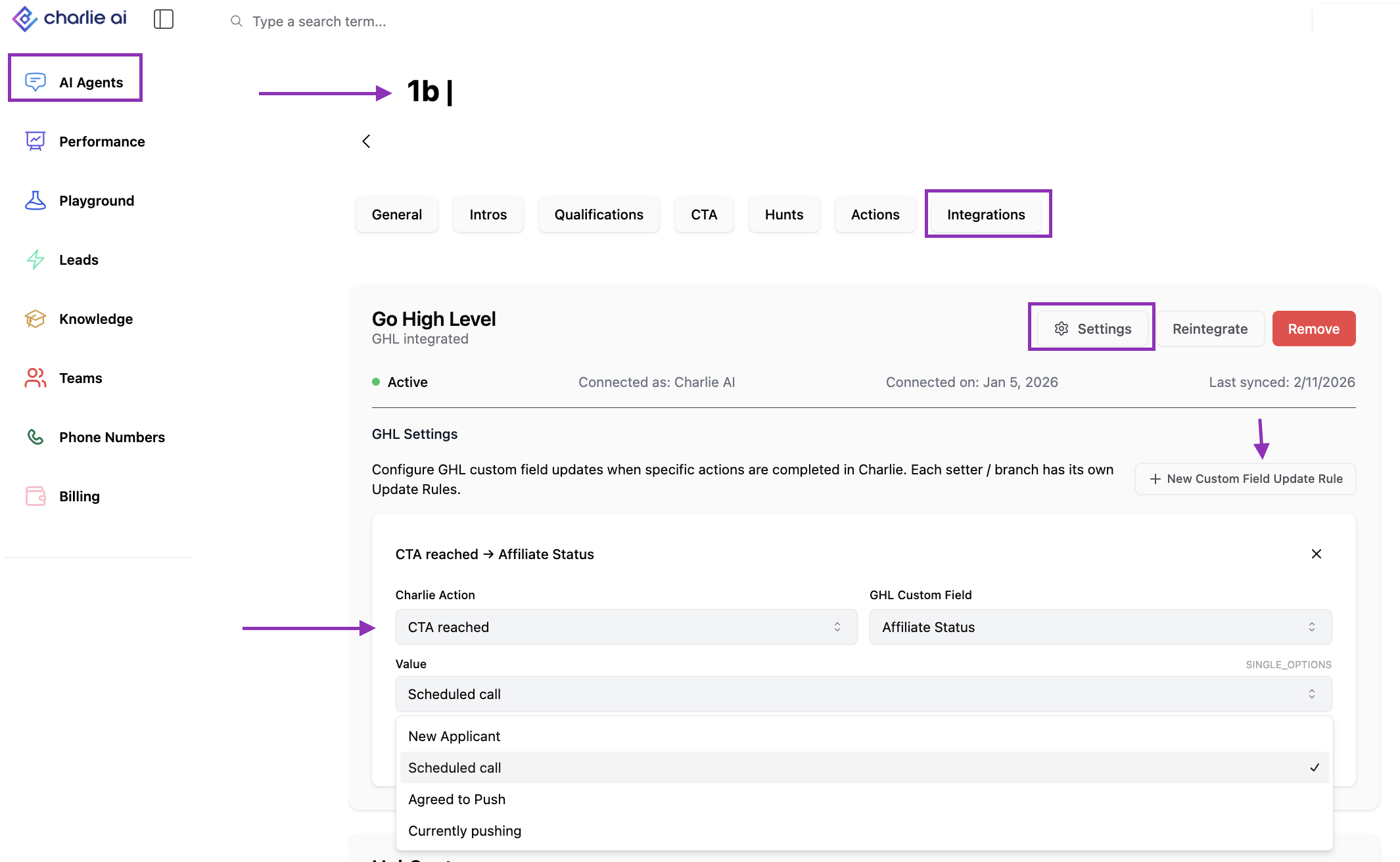
Configuration:
Example: CTA Reached
Select the "Trigger Event": CTA reached
Select the GHL Property that it will affect: Status
Include what should be adjusted in the New Property Value*: Active
Click "save"
The new value can be open text or select list, as defined by the GHL custom field
Visual guidance
Branches don't activate "Lead Activated" or "Intro Response" triggers
Rules
All configured rules display in the Custom Field Updates section as individual rows.
Each Row Shows:
Text defining the rule parameters (e.g., "When CTA Reached → Update Status → To Active")
Edit button (pencil icon or "Edit" text)
Delete button (trash icon or "Delete" text)
Each custom field update generates a log in the conversation that includes:
Timestamp: When the update occurred
Trigger event: What action caused the update
Field updated: Which GHL custom field was modified
New value: What value was written
Status: Success or failure of the update
Custom value mapping
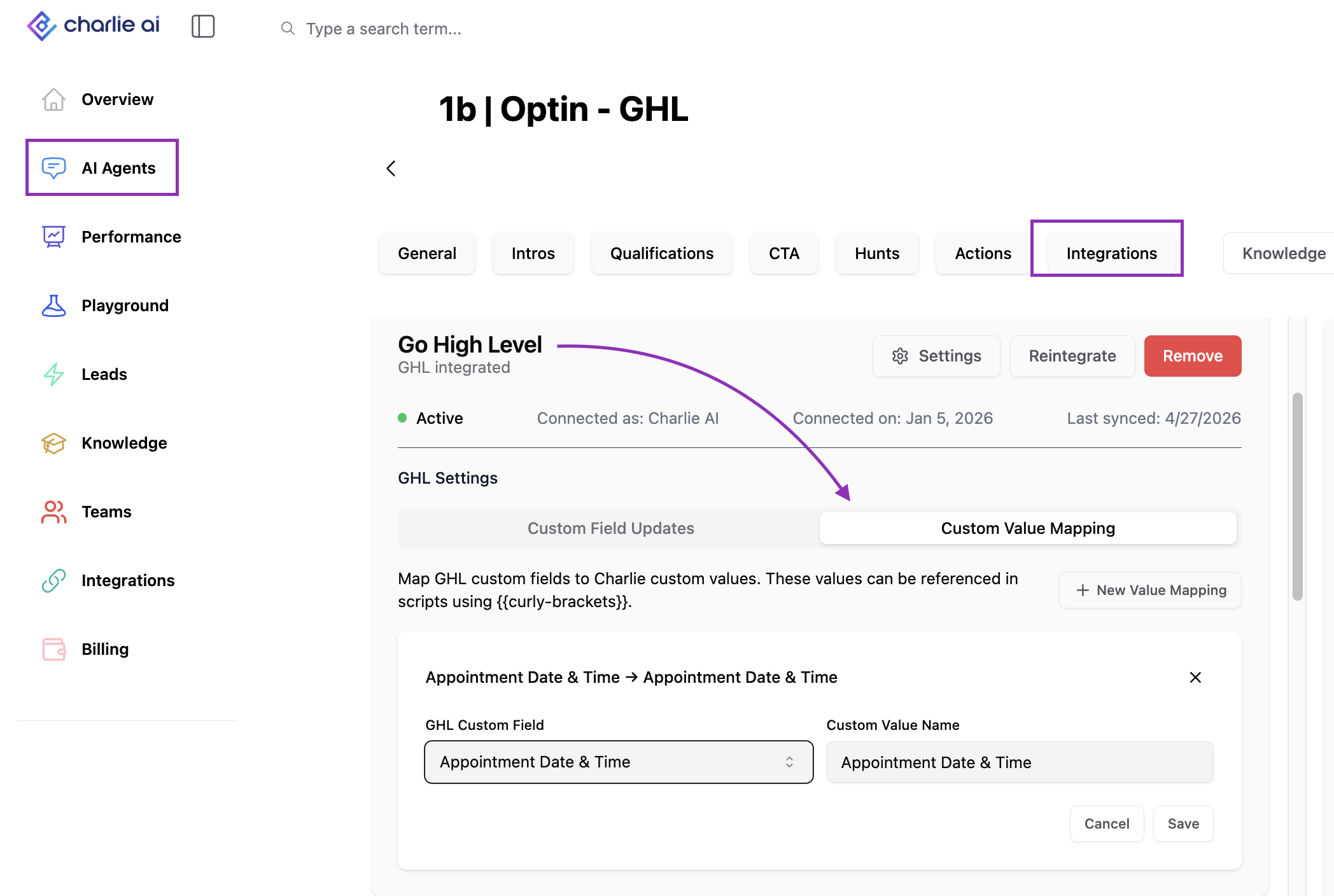
Custom Value Mapping enables Charlie to automatically retrieve information from GHL contact records and use it during conversations.
Before or during a conversation, Charlie pulls specified data from the GHL contact record, allowing it to personalize interactions, avoid redundant questions, and provide contextually aware responses.
Direction of Data Flow: GHL → Charlie
Visual guidance: Custom Value Mapping
Benefits
Perceived Connected Processes: When Charlie references information from previous interactions or existing CRM data, leads perceive a unified, well-integrated system rather than disconnected tools.
Better Custom Experience: Personalization based on known data creates individualized experiences that increase engagement and conversion rates.
Reduced Conversation Length: Skipping already-answered questions shortens conversations, respecting lead time and improving completion rates.
Configuration
Create in Charlie a new custom value
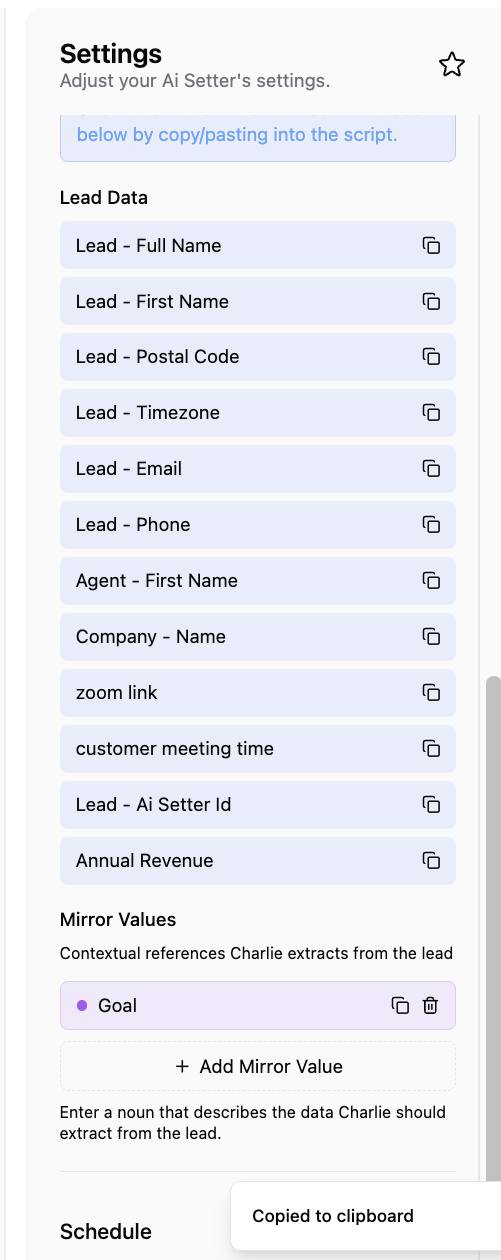
Go to the "Settings" left side menu → look for the "Custom Values" section → scroll down until you find the "Mirrors" option, and "Add a mirror" button → Type the new custom value name.
Visual guidance
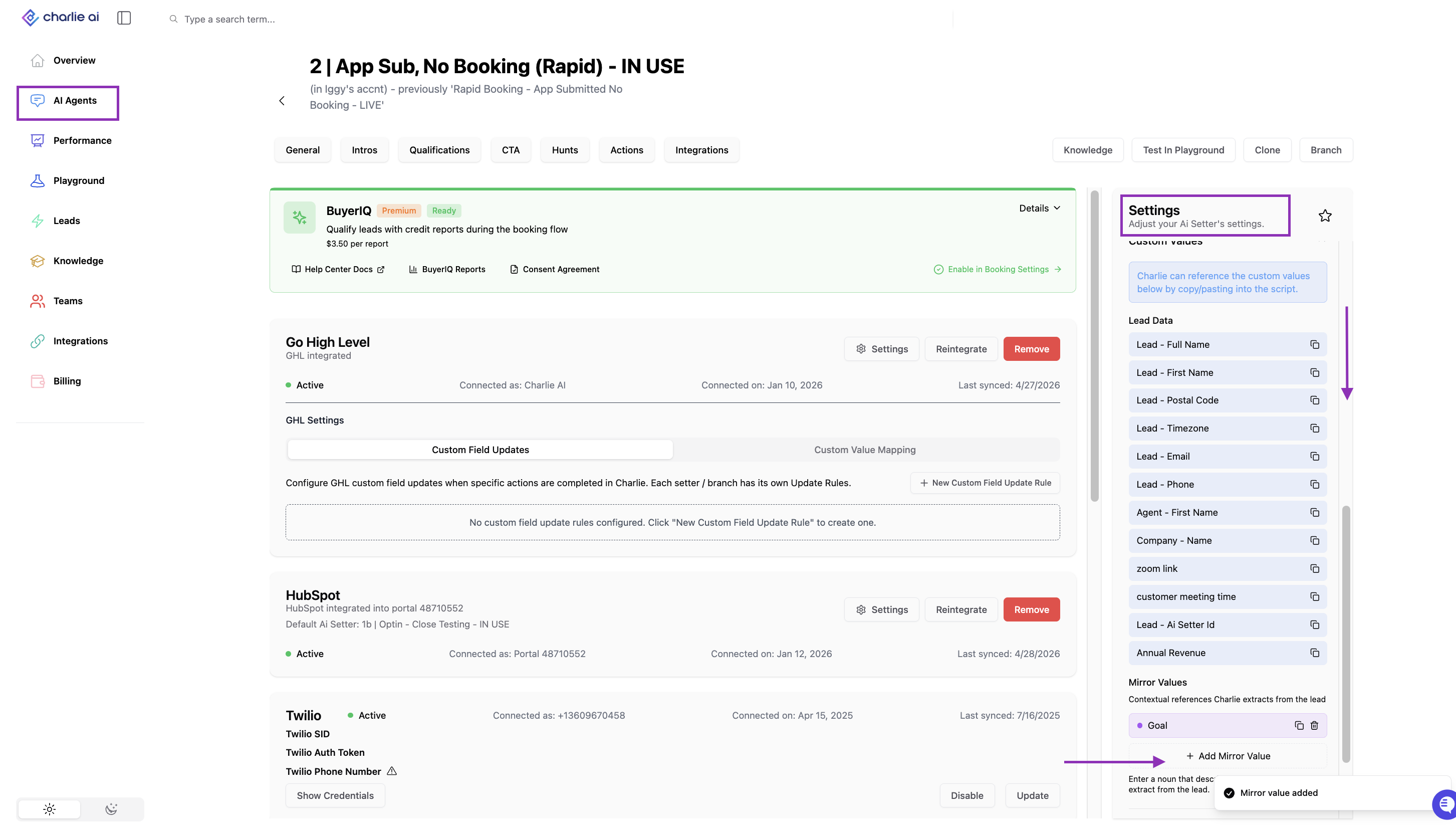
Identify the new custom value name you created in the previous step and "copy" it with the icon next to the trash can
Visual guidance
Add a Value mapping
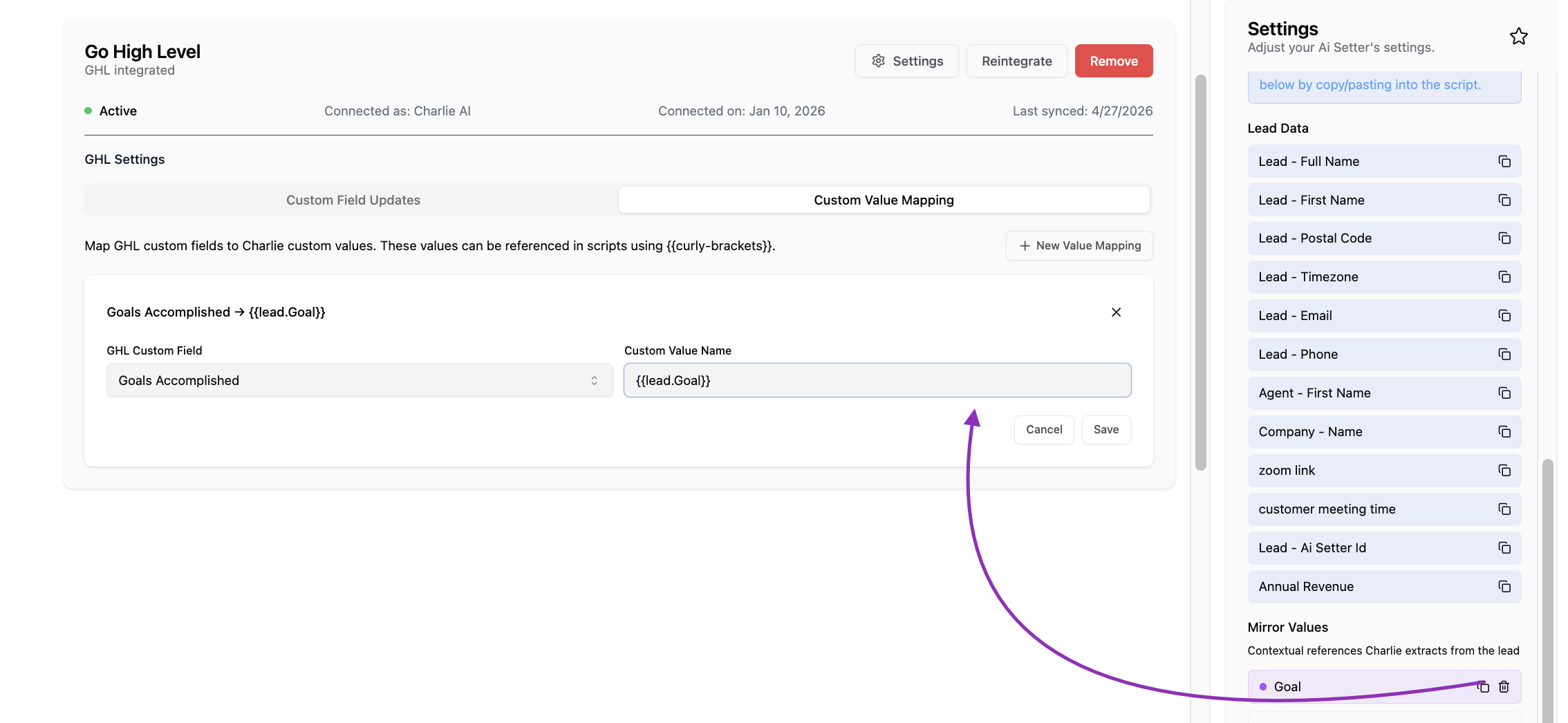
Go to the "Integrations tab" → select settings in the GHL integration → Go to "Custom value mapping" option and click in the "+Add value Mapping"
Select the GHL property and paste the custom value name you got in step 1b. (IMPORTANT: Custom values created by the mirrors just appear in the specific setter were it was included)
Hit save.
Visual guidance
Key insights
Updates happen in real-time as conversation events occur, eliminating delays between Charlie actions and CRM updates.
Your GHL records stay current automatically, freeing your team from administrative work.
Updated properties trigger GHL workflows automatically, creating seamless multi-touch campaigns and follow-up sequences.